MyBirthday
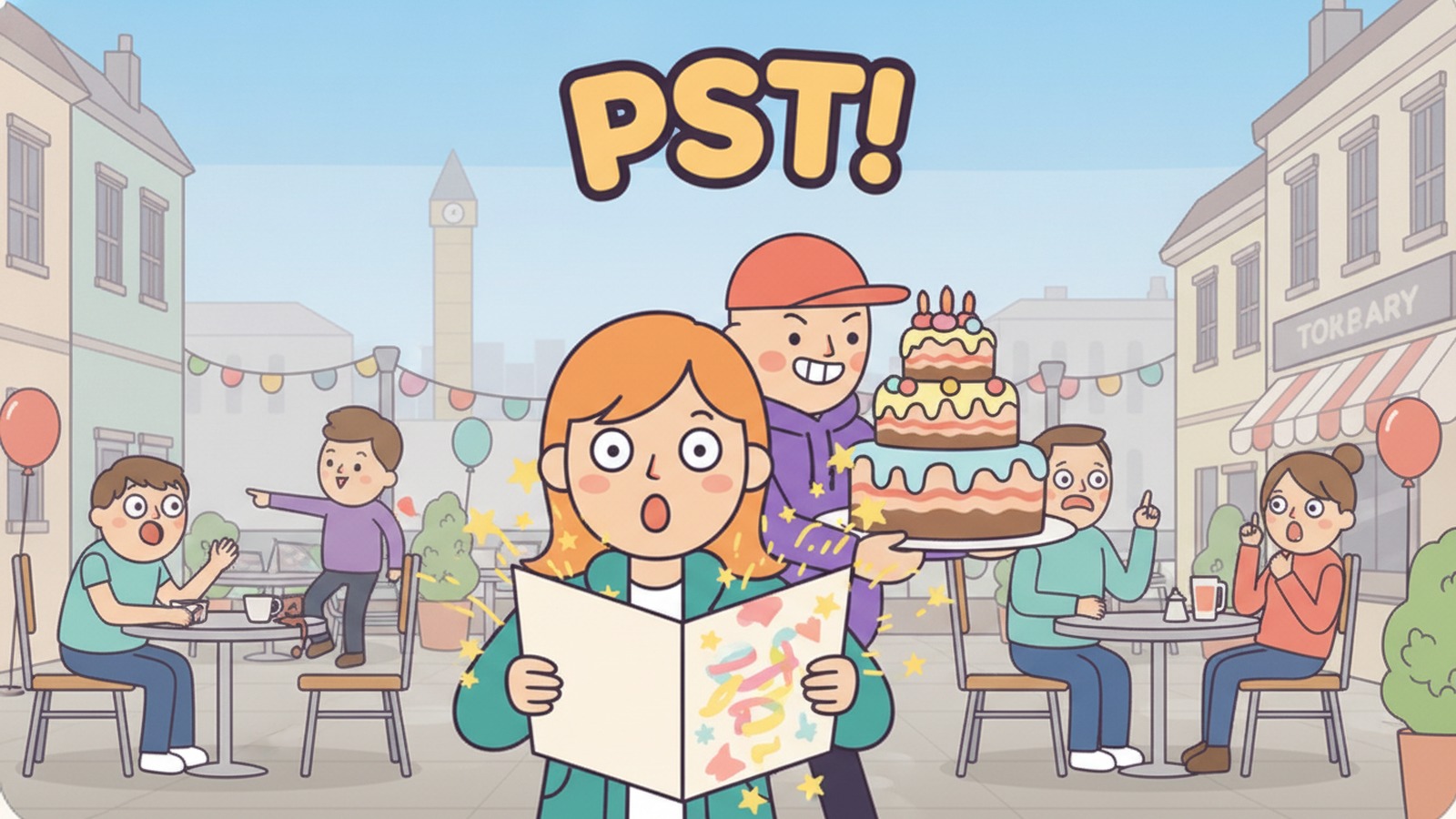
An animated birthday card is a digital greeting where something moves, plays or reacts when the person opens it, and the best one to send today is the one that carries their name, a few real words and a link they can tap on a phone. Everything else, from Canva videos to AI-made mini-films, either takes longer than a last-minute birthday allows or says less about the person. I went through the top-ranking card tools and three YouTube walkthroughs to sort the options by time, effort and how personal the result feels.
- ⏱️ Time decides, a template card takes minutes, while an AI-made film eats an entire evening.
- 🎯 Personal beats polished, a sung name or one real memory outweighs any cinematic effect.
- 📱 Link-first delivery, a phone-friendly tappable link beats attaching a heavy video file.
- ⚠️ Skip the overload, one or two moving elements and a short message read better.
What counts as an animated birthday card?
An animated birthday card is a greeting delivered on a screen, as a link, a GIF or a short MP4 video, where confetti falls, a cake appears, a character sings or the card itself opens. It replaces the paper card in the post, and it can reach someone on another continent in seconds. The label covers very different things, so it helps to separate them before choosing.
What are the main kinds of animated birthday card?
There are four families, and they differ far more in effort than in looks.
Template e-cards are the classic. According to smilebox.com, as of November 2026, you pick from "100s" of animated templates, add photos, text, colour or music, then share, with an optional RSVP feature that tracks engagement. Group versions exist too: sendwishonline.com lets everyone add a message and photos to one shared card that plays as a moving wishboard the birthday person can download.
Exported videos come from design tools such as Canva. You build the animation yourself and download an MP4, which gives total control and costs you the time.
AI-generated films are the newest. A creator generates images, animates each into a clip, adds a voice and edits it all together.
Personalized link cards sit in between. You give a name and a few details, and the tool builds the animation for you. singmehappybirthday.com, for example, cuts your face out of a photo, puts it on one of 23 cartoon outfits and lip-syncs it to a Happy Birthday that sings the recipient's name, with 16 music styles and 900+ names available. MyBirthdayCards works on the same principle: a first name and a few words about the person, and the card draws itself, opens with an animation and can hold a mini-game built around them.
How do the main ways to make an animated birthday card compare?
The honest comparison is about time and skill, not features. A template e-card or a link card is ready in two to five minutes, a Canva animation takes a focused session, and an AI film takes hours across several tools. The table puts numbers on it, using only the figures the sources themselves give.
| Route | Time to finish | Skill needed | Best for |
|---|---|---|---|
| Template e-card (Smilebox) | Under 5 minutes | None | Quick, generic greeting |
| Group wishboard (Sendwishonline) | A few minutes plus waiting for signers | None | Office or family cards |
| Face-singing card (Singmehappybirthday) | About 2 minutes | None | A laugh from close friends |
| Canva animated MP4 | One session, my estimate | Basic design sense | Full control over the look |
| AI cinematic film | Hours (6 images, 6 clips, voice, edit) | Several tools | Invitations, big milestones |
| MyBirthdayCards link card | About 20 seconds | None | Personal and playable, sent by link |
Source: cited pages and video transcripts · Updated 11/2026
Each route has a case where it wins. If an entire office has to sign one card, sendwishonline.com is the better choice, because the signing flow and scheduled delivery are exactly what it was built for. If you need something to print, Canva exports a printable PDF, which no link-based card replaces.
Which route fits ten minutes, and which fits an evening?
With ten minutes, pick a template e-card or a personalized link card and spend the saved time on the message. With an evening, Canva is the sensible ceiling for a birthday card. Anything beyond that belongs to a wedding invitation or a 50th, not a Tuesday birthday you remembered at lunch.
The delivery format matters as much as the build. A link opens in the browser of whatever phone the person is holding, and the Pew Research Center's mobile fact sheet is the place to check how widely US adults own smartphones, and Statista tracks the wider mobile-messaging market. Eazy Greetings' 68-second animated birthday song, watched over 24 million times, shows how far a short, light clip can travel. A 30 MB video, by contrast, can fail in a messaging app. Send a link whenever you can.
How do you make a free animated birthday card in Canva?
Canva is the best do-it-yourself route because the free tier is enough and the result exports as an MP4 video. In the walkthrough from the Noor's Creative Lab channel, you open a new design, search the elements library for birthday keywords, duplicate the page, add a shadow effect, group the two elements, then animate the elements and the text and add a transition. You download it from the Share menu by choosing MP4.
The sequence is short, but the video skips the hard part, which is deciding what the card should say. That is where most homemade cards fall flat.
How do you keep a Canva animation from looking cluttered?
Restraint. The Skills Academy channel's Canva tutorial gives the rule plainly: one or two extra graphic elements are enough, the postcard should not be overloaded, and a short personal message beats a long general one. Its example line is "Happy birthday, Sam. Thanks for all the fun this year." That is eleven words, and it works because of the second sentence.
The same video advises skipping templates with crowns and picking calm colours with plenty of space for text. I agree with all of it, and I would add one rule: animate the message, not the decoration. A greeting that fades in line by line gets read, whereas a card where every balloon bounces makes people look at the balloons.
If the animation outshines the sentence, the card has lost its job.
For wording that sounds like you and not like a template, what to write in a birthday card walks through it by relationship.
Is an AI-generated cinematic birthday card worth the effort?
For a birthday card, almost never. An AI cinematic card is a short film built from AI-generated images that are each animated into a clip, then voiced and edited together, and the process is so long that it only makes sense for invitations and big milestones. The clearest walkthrough comes from Williana Nunes, and it is aimed at birthday party invitations, not greeting cards.
Why does the AI route take so long?
Count the steps in her tutorial. She uses ChatGPT to write a script, Google's Nano Banana image model in Gemini to turn a photo into a fairy-tale character, and Google's Veo 3 in Flow to animate each image. Clips are limited to 8 seconds each, and she builds six of them, so the finished invitation is a small production.
The budget runs out quickly too. According to her video, Flow gave her 100 credits per month, 20 per video, so five clips per account per month, and she suggests opening a second Google account to keep going. The narration is recorded separately in another tool and everything is assembled in CapCut.
The result is genuinely striking, and I would not talk anyone out of it for a 40th or a child's party. But for a card that has to exist by tonight, it is the wrong tool, and a personalized birthday video with real footage of the person will usually land harder.
What makes an animated card feel personal instead of generic?
An animated birthday card feels personal when it contains something that only applies to one person, such as their name, a shared memory or a joke between the two of you. Animation is only the wrapper. singmehappybirthday.com says it directly: most animated ecards online are "the same cartoon designs singing the same tune to everyone", which is why a name inside the song changes the effect.
I think that diagnosis is right, with one caveat. A sung name is charming from a close friend. From a colleague, a plain animated card with one specific line about the person lands better.
Does the technology matter to the person receiving it?
Much less than builders assume. On r/RandomActsofCards (r/RandomActsofCards), strangers ask each other for birthday cards, and the requests are revealing. One poster, turning 36 in November, wrote that they had not really celebrated since losing their mother 25 years ago and would love "anything" in the letterbox. Another, turning 54 on December 2nd, asked for any card at all, with no specification of design.
Neither asks for animation. Both ask for proof that someone thought of them. An animated card is a good delivery system for that proof, and a poor substitute for it.
Does a mini-game make a card better?
It can, when it is built around the person and short enough to finish in under a minute. That is the idea behind MyBirthdayCards: the card draws itself from a name and a few words, opens with an animation and can include a mini-game with their name in it. Doozy Cards, one of the established ecard sites, leads with a 10-day free trial and a large catalogue of funny and musical cards, which suits browsing but not speed.
Where a mini-game falls flat is the formal recipient. A boss or a distant relative does not need to pop balloons, and for them a short, warm written message is the safer call.
Which animated birthday card should you send today?
Send a personalized link card with a name and one specific line. It is fast, it opens on any phone, and it has the one ingredient that makes people feel celebrated, which is evidence you thought about them. Reserve Canva for when you want full control or a printed copy, and keep AI films for invitations and milestones.
What is the quickest version that still feels personal?
Three moves, about two minutes of effort. Pick the person's first name, write one sentence that only applies to them (a running joke, a trip, the thing they always say), and send it as a link rather than a file. If the sentence is the hard part, borrow the structure from funny birthday wishes for a friend and swap in your own detail.
My recommendation is simple: choose the card that leaves the most time for that sentence. To see it work end to end, make an interactive birthday card with a mini-game and send it by link before dinner.
FAQ
What is an animated birthday card?
An animated birthday card is a digital greeting with movement, such as falling confetti, a cake appearing, a character singing or a card that opens on screen. It is usually sent as a link, a GIF or a short MP4. Some are templates, others are built from scratch in a design tool or personalized automatically from a name.
How do I make an animated birthday card for free?
The fastest free routes are a template e-card site or a personalized link card, both ready in a few minutes. For more control, Canva's free tier lets you animate elements and text and download an MP4 from the Share menu. Whichever you choose, add a short message that mentions the person by name.
Can I send an animated birthday card by WhatsApp or text?
Yes, as long as it is delivered as a link or a small file. Link cards open in the phone's browser and work in WhatsApp, SMS and email alike. Large MP4 videos can be compressed or rejected by messaging apps, so a link is the safer format.
Is an animated card better than a printed one?
It depends on the person and the distance. An animated card arrives instantly, works across time zones and can include sound, a game or a group message. A printed card can sit on a shelf, which matters for grandparents and for people who keep cards, so for them it is worth sending both.
What should I write in an animated birthday card?
Keep it to one or two sentences and make at least one of them specific to the person. The Skills Academy example, "Happy birthday, Sam. Thanks for all the fun this year," shows the pattern: a greeting, then a reason. Long, generic messages get skimmed, and short specific ones get kept.
Sources
- How to make a birthday card in Canva for free — Skills Academy
- How to Make a Birthday Card in Canva (Animated) | Step-by-Step Tutorial — Noor's Creative Lab
- Convites Animados INCRÍVEIS de Graça! — Williana Nunes
- Animated Birthday Wishes | Create It Under 5 Mins! — smilebox.com
- Free Animated Birthday Cards | Birthday GIF eCards Online — sendwishonline.com
- Find a Animated Birthday eCards or eCard — doozycards.com
- Animated Birthday Card | Free Cartoon Card from Any Photo — singmehappybirthday.com
- Animated Happy Birthday Song with magical cake appearance in 4K — Eazy Greetings
- Mobile fact sheet — pewresearch.org
- [Request] Card for my birthday [Japan] — r/RandomActsofCards
- [Request] Birthday cards for my 54th birthday [US] — r/RandomActsofCards